Teach Your Dog to Settle on a Mat: Build Quiet Time Gradually
Edited by Scoop for theTailed Editorial Desk · Published

Share
A familiar mat can give quiet-time practice a clear starting point. Here is how to build the exercise without confusing a dog lying down with a dog feeling relaxed.
Edited by Scoop · theTailed Newsroom · 4 minute read
You sit down for the evening. Your dog checks the kitchen, returns to check you, then checks the kitchen again. Nothing has changed, but the possibility remains worth investigating. Quiet time can feel like an activity that everyone in the household understands except the dog.
A mat gives you a small, practical place to begin teaching that pause. It might be a blanket or towel rather than a special training purchase. The useful question is what happens there: does your dog choose to approach, get comfortable and gradually spend longer resting?
Battersea and Dogs Trust both publish reward-based settling exercises, with an important difference in emphasis. Battersea builds a mat routine in stages; Dogs Trust encourages relaxed behaviour offered without instructions. This guide explains that distinction and gives you a manageable progression to discuss alongside their original instructions, rather than a deadline for producing a perfectly still dog.
Choose the exercise before choosing the mat
In Battersea's mat-training guide, the mat becomes a familiar cue through repeated practice. Its sequence moves from investigating the surface to standing, lying down and resting the head. That is the approach to follow if you want a defined mat exercise.
Dogs Trust's settling exercise instead asks owners to notice and reward quiet behaviour without continually telling the dog what to do. These approaches share a gradual pace, but the instructions are not interchangeable. Choose one clear exercise instead of switching between repeated commands and waiting for spontaneous behaviour within the same attempt.
A comfortable resting place is a separate household need. Our calm-corner guide covers arranging that space; the focus here is the training sequence, not redesigning the room.
Make the first repetition small
Battersea begins with a comfortable mat, blanket or towel and rewards investigation by placing treats on it. Progress comes through rewarding paws on the surface, then building towards all four. Begin somewhere quiet, as Dogs Trust recommends for settling practice.
A Karen Pryor Academy exercise similarly builds from a paw touching the mat towards fuller contact, using a clicker to mark each stage. Its details differ, which is another reason to follow one complete method rather than mixing instructions.
For your own session, decide what you are looking for before you start. An approach to the mat and a complete lie-down are different steps. If you expect the finished behaviour immediately, it becomes difficult to recognise the smaller success that happened in front of you.
Think of the first practice as introducing the exercise. It does not have to resemble the evening you eventually hope to enjoy. Keep your expectations tied to what your dog can do comfortably now, rather than to how long you would like to sit down later.
Separate the position from the pause
Once standing on the mat is comfortable, Battersea asks for a lie-down and later rewards head-resting. Dogs Trust also names weight shifts and head-resting among behaviours to notice as a dog becomes more relaxed.
That distinction gives you a better observation question than simply counting seconds: what is the dog doing during the pause? A dog can be lying down while watching every movement you make. Record the behaviour you can see; do not claim to know exactly how your dog feels from one position.
There is no need to turn every quiet moment into another instruction. If the exercise has become a stream of requests, return to the original guidance and check which stage you are actually practising. A clear, modest task is easier for an owner to repeat consistently than an improvised test with changing rules.
Build time before adding a busier setting
Both charities describe extending the pause gradually. Battersea then introduces distance from the owner and different locations. Dogs Trust advises making distractions less demanding, or moving farther away from them, when a dog cannot settle.
Use those stages to organise your practice notes: place, length of pause, your distance and the distraction present. These are descriptive notes, not a scoring system for the dog. They help you spot when you have changed several parts of the exercise at once.
For example, moving the mat to another room while also standing farther away gives you two changes to untangle if the attempt is difficult. Keep the next repetition simple enough that you can identify what changed. A busy café is a different setting from your sitting room, not proof that home practice has been wasted.
Let the next attempt follow the evidence
If the dog leaves the mat, treat that as information about the attempt. Battersea recommends returning to an easier stage. Avoid setting a universal number of sessions: neither this guide nor an illustration can assess your individual dog's starting point.
Before the next practice, ask which part was comfortable and which change came immediately before the difficulty. Return to the manageable part. For individual support, follow the behaviour-service links in the charities' guides; this routine is general training guidance and makes no claim to treat anxiety or another underlying problem.
End your notes with one achievable next step, such as repeating the same quiet setup. Progress can be an ordinary moment that no longer needs much attention. The mat has done its job when it becomes less interesting to supervise.
From theTailed
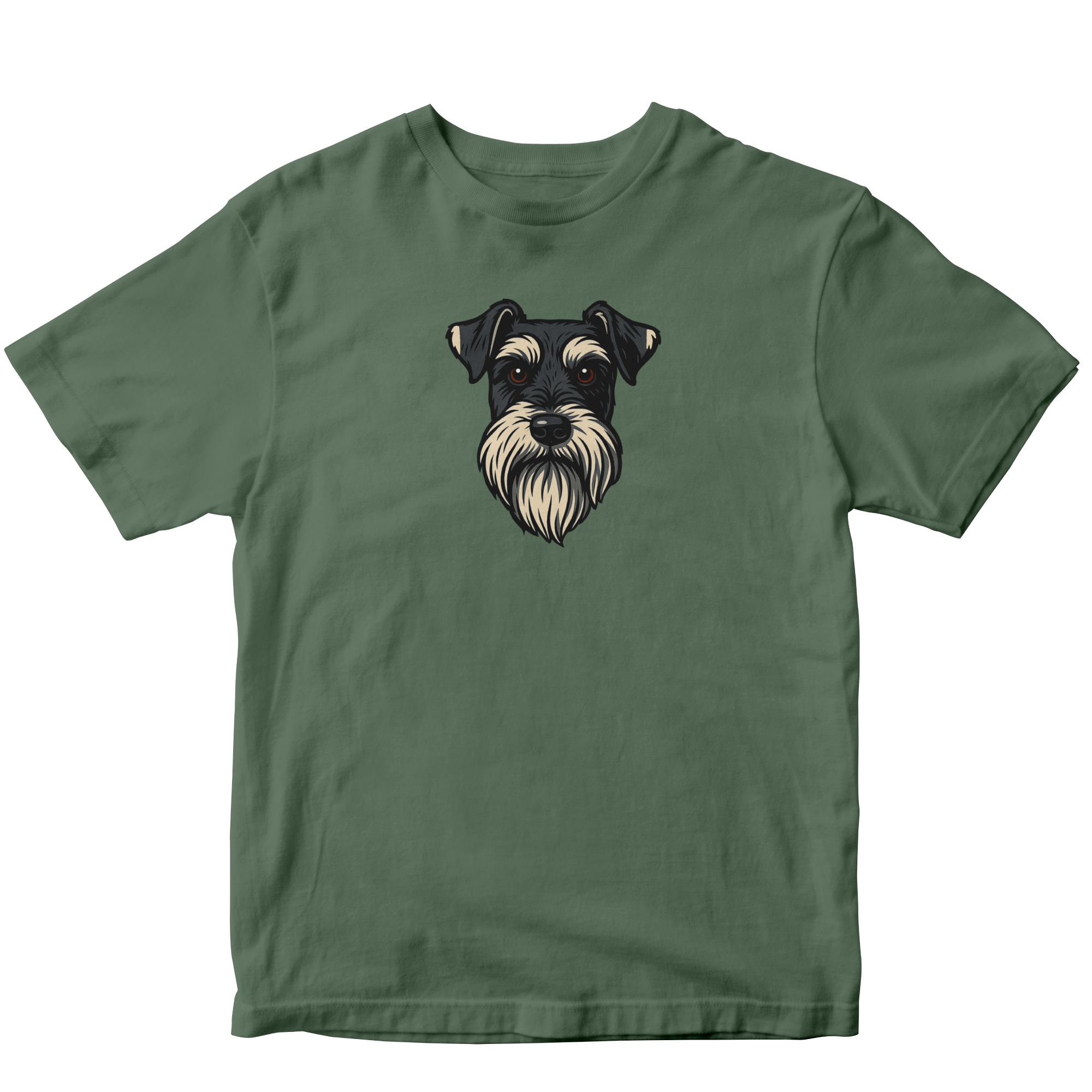
For the dog whose quiet-time face deserves a place beyond the sitting room, explore the theTailed personalised large-print pet T-shirt, featuring a comic-style illustration based on your pet photo.
Sources and update record
- Battersea: How to train your dog to be calm and relaxed, updated 26 June 2026.
- Dogs Trust: Train your dog to settle.
- Karen Pryor Academy: Teach settle on a mat, published 1 April 2018.
Guidance and product information checked 8 September 2026. This is a general home-training guide; progress varies between dogs.